



Public opinion turns against Tesla: falling sales amid criticism of Elon Musk
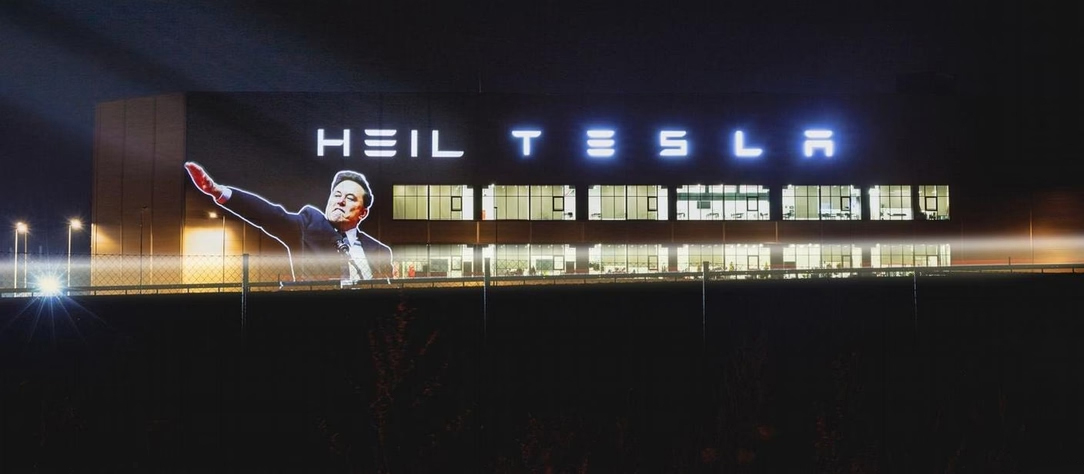
Tesla was once synonymous with innovation and prestige, but the company is now facing a wave of outrage. Public opinion has rapidly turned against the electric car manufacturer, and the main reason for this is Elon Musk himself—his political actions and statements are driving customers away. The consequences were not long in coming: from mass cancellations by potential customers in Europe to a sharp drop in sales worldwide. Let’s take a look at how Tesla lost the public’s trust and what consequences this has for the brand.
Germans Against Tesla: 94% Refuse to Buy Due to Musk’s Policies
The first warning sign came from Germany, one of Tesla’s key markets. A survey conducted by the major German publication T-Online revealed staggering results. Of approximately 100,000 respondents, a full 94% stated that they no longer wish to buy Tesla electric vehicles, and only 3% are still considering such a purchase. This mass rejection of Tesla is primarily linked to Elon Musk’s political activities. Many Germans are outraged by his controversial actions: his interference in politics and his open support for controversial figures and movements. In particular, Musk is associated with U.S. President Donald Trump and has even expressed support for the far-right AfD party in Germany—these facts have seriously undermined the reputation of both Musk himself and the Tesla brand in the eyes of the German public. It is therefore not surprising that the survey results paint a grim picture: Germans are turning away from Tesla en masse in protest against Musk.
Tesla’s Sales Decline in the Global Market
Elon Musk’s negative image has begun to take a serious toll on Tesla’s global sales. In 2025, the company is rapidly losing ground in various parts of the world. China, Tesla’s second-largest market, has seen a sharp decline: in February, sales of Tesla electric vehicles manufactured in China fell by 49% compared to last year. This is Tesla’s lowest sales figure in China since August 2022. The reasons range from increased competition from local manufacturers (such as the rapid growth of the Chinese company BYD) to waning consumer interest, partly driven by Musk’s controversial behavior.
Australia is experiencing an even sharper drop in demand. According to February data, Tesla’s sales there fell by approximately 72% year-over-year. The once-popular electric vehicles are now selling much more slowly. While Australians have traditionally been open to innovation, the political scandals surrounding Musk have not gone without consequences. Moreover, some Australian Tesla owners are so disappointed that they have begun to demonstratively get rid of their cars—selling them en masse or even placing special stickers on their bumpers to distance themselves from the brand. Similar sentiments are spreading in other countries as well—the Tesla brand is transforming from a symbol of progress into a marker of political views, from which some prefer to distance themselves.
Europe is also showing alarming trends. In January, Tesla sales in Europe fell by nearly half—down 45% compared to the same period last year. The decline continued into February: for example, in Germany, new Tesla registrations plummeted by 76% compared to February 2024. And this is happening even as the overall electric vehicle market in Europe has been on the rise. In other words, Tesla is losing market share, while competitors—from well-known automakers to Chinese newcomers—are seizing the moment. Experts note that the damage to Tesla’s image caused by Musk’s behavior is only making the situation worse: many environmentally conscious buyers now prefer to choose electric cars from other brands to avoid being associated with the controversial billionaire.
Criticism of Elon Musk: Protests, Arson, and Safety Concerns
Public anger and disappointment are evident not only in sales figures but also in open protests. In the U.S. and Europe, more and more former Tesla fans are moving from words to action. On both sides of the Atlantic, demonstrations are being organized outside Tesla dealerships, and on social media, users are calling on others to get rid of their Tesla cars in protest against Musk’s stance. Some owners are even putting their Teslas up for sale on principle, hoping to express their protest in this way. As previously mentioned, a full-fledged movement is underway in Australia: quite a few drivers have rushed to sell their Tesla electric cars to “distance themselves” from the brand. Similar sentiments are spreading to other countries—the Tesla brand is transforming from a symbol of progress into a marker of political views that people want to distance themselves from.
Radical opponents of Tesla have gone even further. Cases of vandalism targeting the company’s property have been reported in various countries. In Germany, this took an extreme form: in one of Berlin’s districts, unknown perpetrators set several Tesla cars on fire, resulting in four vehicles being completely destroyed. A similar incident occurred recently in the U.S. as well: in Las Vegas, several electric vehicles were deliberately set on fire overnight at a Tesla service center. The police are investigating these cases as targeted attacks. Although the organizers of official protests emphasize the peaceful nature of their demonstrations and condemn such violent methods, the very fact of the arson attacks attests to an unprecedented level of tension and outrage in society.
The repercussions of Musk’s scandal-plagued reputation are being felt even at official automotive industry events. In Canada, the organizers of this year’s Vancouver International Auto Show excluded Tesla from participating in the exhibition for safety reasons. The auto show’s management explained that it feared for the safety of visitors and participants due to possible protests against the presence of Musk’s brand. The company was first politely asked to withdraw on its own, and when it refused, Tesla’s access to the event was simply revoked by force. This unprecedented decision underscores just how toxic the atmosphere surrounding Tesla has become: even neutral venues are wary of the negative consequences and risks associated with Musk’s name.
Tesla, once the leader of the electric vehicle revolution, is now facing a serious crisis of confidence. Through his actions, Elon Musk has effectively alienated a significant portion of his target audience—progressive, environmentally conscious people. Record-high poll numbers, a sales slump, and a wave of public protests clearly signal that Tesla’s brand reputation has suffered due to its founder’s behavior. If the situation doesn’t change, the company will have to make a tremendous effort to regain customer trust and restore its image. For now, public opinion remains extremely critical, and this directly affects Tesla’s future.
📌 Stay up to date on the latest automotive news at bex-auto.com


